Quick answer
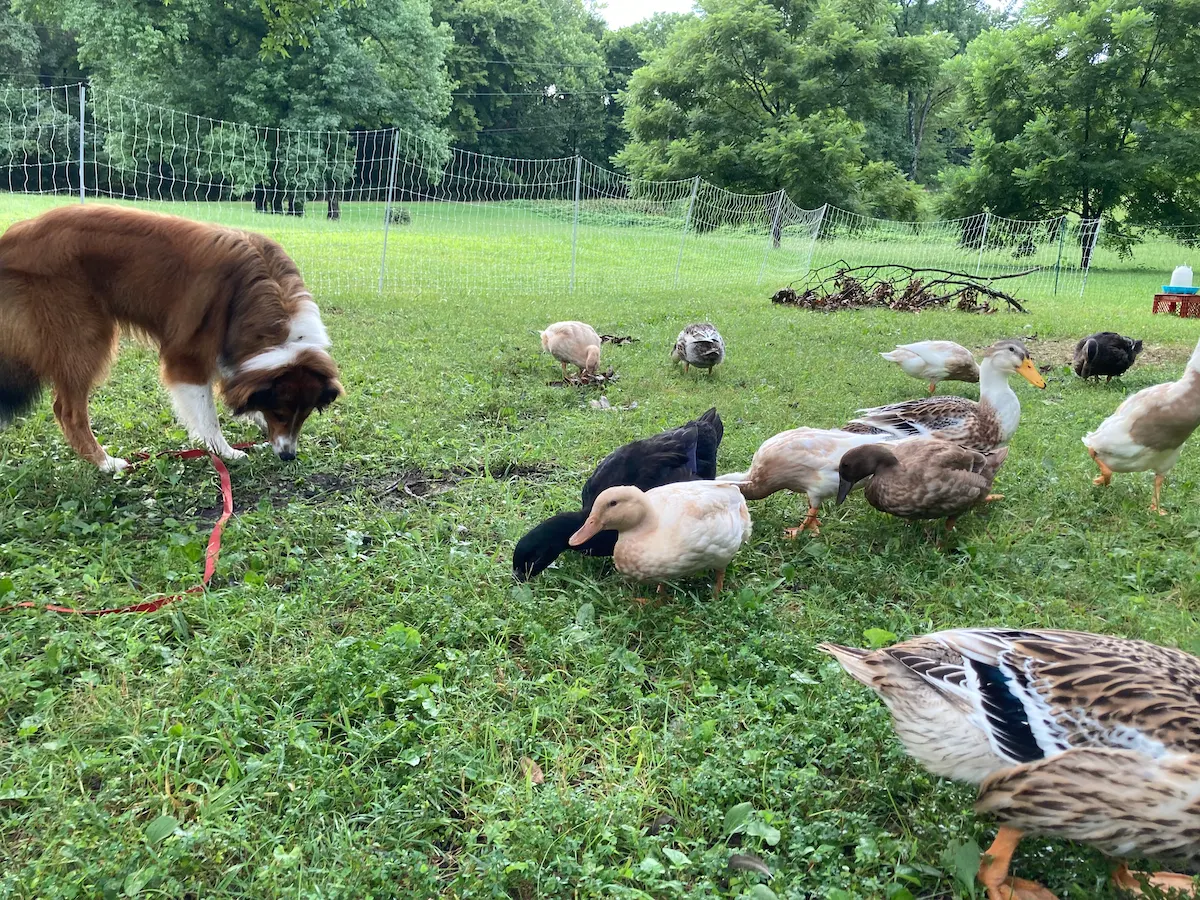
You can trust your dog off-leash with chickens once they show integrity—behaving the same whether or not you’re watching—across repeated tests that gradually stretch your time away. Reliable recall helps while you’re still supervising, but it can’t protect poultry when you’re gone. Maturity, an energy outlet, and a setup where both species have their own space matter just as much.
My two dogs are Old-Time Scotch Collies, dogs bred to be multi-purpose farm helpers. However, each excels in different areas—and both aren’t natural poultry companions!
My oldest dog, Lennox, can’t stand how messy ducks are. You can see him tiptoeing around the duck kiddie pools, searching for dry, clean places to walk.
Maisie, my second dog, is a natural farm dog. She takes her farm duties very seriously, and when she is monitoring the ducks, she couldn’t care less if she gets muddy paws or is splashed with dirty duck water.
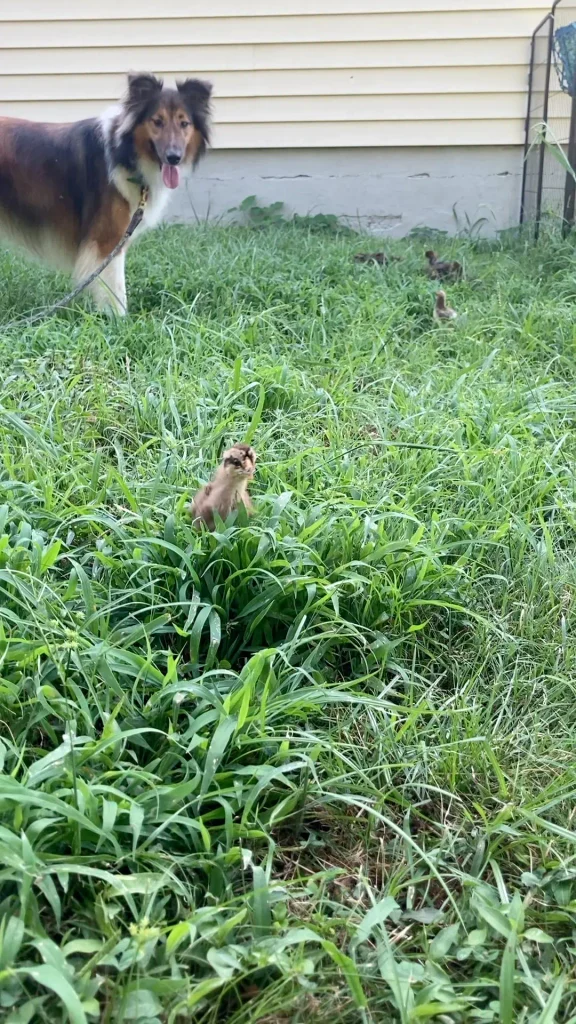
That difference was obvious during training too. Maisie is a natural protector, and I trusted her alone with our ducks very quickly. I ran through most of the tests below while we had ducklings and chicks. Lennox took much longer. I spent months slowly acclimating him to the ducks, and it was close to a year before I trusted him alone with them. Keep in mind that he didn’t meet any poultry until he was over two years old—so Maisie had the advantage of starting her training as a puppy.
Today, I trust both of them alone with my flock—with limits. Here’s how I trained for reliability (so I trust them even when I’m not around), and how to tell when your dog is ready.
Off-leash and unsupervised are two different milestones
Before you trust your dog alone with chickens, you need to spend time training your dog off-leash around chickens. When training off-leash, you have the opportunity to guide and encourage the behavior you want. Reward your dog when they listen to you and display relaxed behavior.
If you trust your dog to behave well when you are distracted or doing outdoor chores, you can test your dog on how they behave when you are not around.
Just remember: reliable recall and your dog’s responsiveness to commands matters a lot while you’re supervising—but they are irrelevant once you leave. Many farm dog breeds (especially livestock guardian breeds) are bred to make their own decisions, and as a result, they don’t always have great recall. And yet they are the preferred breeds to leave alone with livestock. What keeps your flock safe when you’re gone isn’t obedience. It’s integrity and consistency.
Remember
Train off-leash before you leave your dog unsupervised with your flock.
When off-leash, you are still supervising. Your dog must consistently show good behavior before moving to the next stage. Because once you leave your dog unsupervised, there is no intervening.
How to test for integrity and consistency
We all learned about integrity as kids—this is the “do the right thing even when no one is watching” trait. We rarely apply this to dogs, but it does, by definition, describe exactly what you want from your dog before leaving them alone with your flock.
Here are some ways to test for “integrity” and consistency before leaving your dog alone with your chickens all day:
| Test | What you’re watching for | Acing the test looks like |
|---|---|---|
| Dog joins daily chores—this provides dog short periods where you are distracted | Your dog is independently choosing to stay relaxed | Your dog doesn’t choose to harass chickens while your back is turned |
| Dog is fenced with chickens while you hide and watch from a distance | Your dog remains relaxed and confident | Your dog may gently herd or engage with chickens but chooses to stay relaxed |
| You leave your dog but set up a camera so you can watch their behavior | Now you can test your dog for longer periods, so you are watching for signs of boredom or anxiety that they may take out on the chickens | Your dog is happy, comfortable, and relaxed |
| You leave your dog for short periods and gradually increase time away | Your dog does not develop new (negative) behaviors after being left alone | You leave for a full day and don’t feel the need to check in |
Mostly unsupervised—the realistic middle
I don’t leave my dogs alone with my ducks and chickens all day. I work from home, and during the day the dogs have access to a small fenced area that the chickens and muscovies really like. The dogs usually interact with the poultry there unsupervised, but my birds often decide to give the dogs their space and fly over the fence.
Part of why they don’t stay with the ducks all day is because I don’t have a good dog fence. The other part is simple: I don’t want them to smell like duck poop. I also don’t think Lennox would enjoy being stuck with dirty ducks all day.
Instead, the dogs often join me for chores, and I trust them on walks around the property. The reality, though, is that neither species has much desire to be around the other (unless it’s a desire to herd).
So while my flock does interact with my dogs when I’m not watching, they generally choose to give each other space.
Set up the space so both species can coexist
If your goal is to have a dog on hawk patrol all day that stays close to your chickens, I think it’s very important to consider each species’ needs.
Avoid cramming all your animals in one space—instead, make sure your dog has plenty of space to explore without having to walk through muddy chicken poo. Make sure both species have all-day access to shade during hot weather—and that there are multiple shady spots for them to choose from.
Here are some additional space and setup considerations that can help both dogs and chickens happily coexist in the same yard:
| Infrastructure needs | Why they’re important | Potential infrastructure solutions |
|---|---|---|
| Chicken shelter | Chickens need a way to escape if your dog goes into herding mode or is just playing too boisterously | A fenced or covered area with small openings—this could even be a small chicken door to your coop |
| Chicken feed | Chickens need access to feed that your dog can’t steal | You can feed only during supervised times or put their feed in their sheltered area |
| Dog lounge area | Dogs generally want a clean area where they can lay down | A jump gate to a large kennel or run can provide this |
| Dog feed | Dogs should never feel the need to defend their food against poultry—this is a recipe for disaster | You can feed only during supervised times or leave feed in their kennel/run |
| Dog water | Ducks in particular are notorious for dirtying water—make sure your dog has access to clean water | An elevated water bowl can help keep water inaccessible to poultry |
Maturity and when to consider a training reset
Many livestock guardian dog (LGD) training methods suggest that you continue training until the LGD is mature, around two years old. That’s because your dog goes through several phases of learning and development in the first couple years of their life, and with each one, you need to keep reinforcing their training.
If your dog is young, never assume that this is a “once and done” training situation. Instead, gradually give independence but stay aware of changes in your dog’s behavior, especially around poultry. If you notice any changes, take the time to return to the basics, slowly moving through on-leash training all the way through off-leash tests.
If you have had some difficulties training your dog to be calm around poultry, it might be best to wait until they are mature before considering leaving them alone with your flock.
Sometimes the answer is “not yet” or “never”
Some dogs may never pass the “integrity and consistency” tests. The good news—you tested your dog before leaving them completely alone, and you avoided losing chickens to your dog’s prey drive.
This doesn’t necessarily mean they won’t ever be able to be left alone with chickens. But it is important to keep reinforcing positive behavior in situations where you remain in control. Be patient and consistent. And keep in mind that some dogs just aren’t cut out to hang out with these weird feathered dinosaurs.
I think the biggest victory is learning and understanding your dog’s strengths and building a bond with your dog. If you are constantly battling your dog’s prey drive, it may be time to turn it loose in the barn and let it catch some rats!
What life looks like when they share the yard
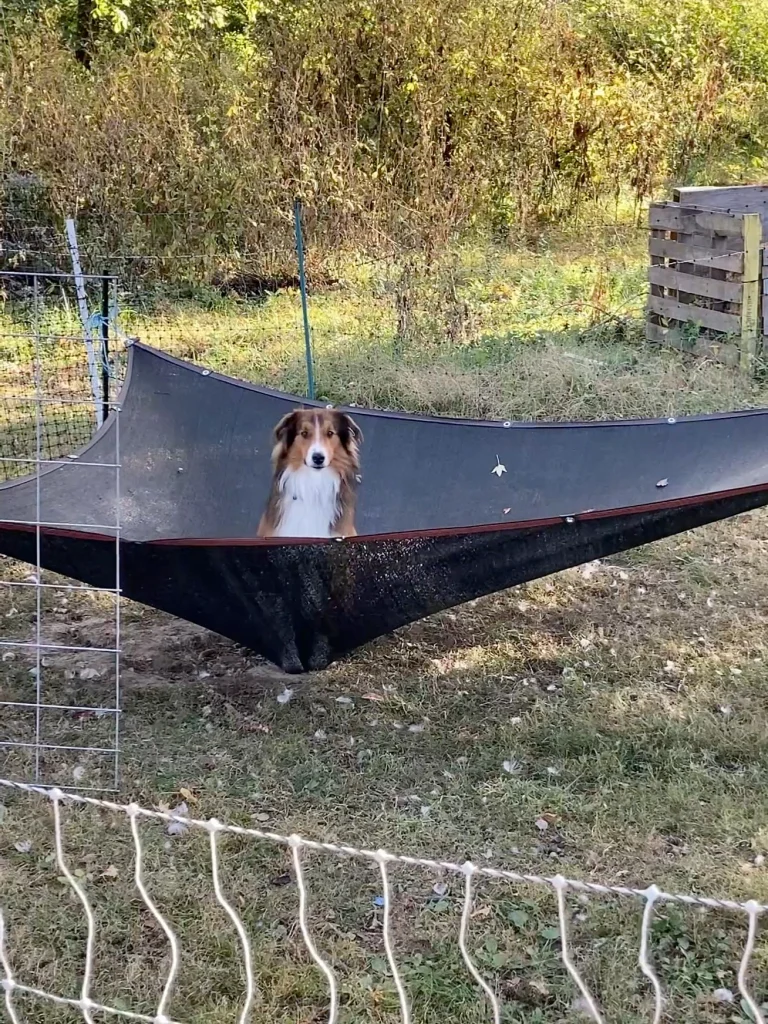
For a dog that successfully shares a yard with your flock, you can expect a happy (and dirty) dog at the end of the day. You can also expect fewer successful attacks from predators. You may also get to experience the ongoing joys of keeping fences maintained and looking out the window whenever a barrage of barking occurs!
Keep in mind that this is the “success” story. If your dog needs access to air conditioning or your companionship throughout the day, a realistic middle ground may be a better fit. Just remember—if your dog shares space with your flock, your dog will get dirty! Prepare for an ongoing battle with stinky smells and a dirty dog coat.
Looking for more tips on training herding dogs around chickens or ducks? Read the full guide on training your dog around chickens—starting from day one in the brooder box.
Frequently Asked Questions
At what age can I trust my dog alone with chickens?
Most dogs aren’t mature enough to be reliably well-behaved around poultry until they’re at least 2 years old. Age alone doesn’t make a dog ready, though. Maisie earned my trust quickly, while Lennox took months of training before I trusted him alone with poultry.
Does my dog need perfect recall to be left alone with my flock?
No. Recall and training help a lot when you’re around—but do nothing when you’re gone. What matters more is integrity and consistency: your dog behaves the same way, whether watching or away from the house.
How do I get my dog to leave my chickens alone?
Practice basic training commands while your flock is in the area. Reward positive behavior to keep your dog engaged. Over multiple training sessions, progressively move closer to your flock. Continue to reward calm behavior. Repeat this until calm becomes their normal behavior.
How do I test whether my dog can be trusted alone with my chickens?
Stage a departure. Walk out of sight, or watch on a camera from inside the house, and see what your dog does around the chickens. Repeat it many times in different situations. One good test doesn’t prove readiness.
Is it okay if my dog herds the chickens?
Gentle herding is fine if you want to retain your dog’s herding drive. The problem starts when herding turns into a chase, driven by prey drive. If your dog has a more energetic herding style, you may choose to train them not to herd poultry at all. Just know that this can cause some issues later if you ask your dog to herd (chickens or other livestock).
What if my dog is never ready to be alone with the flock?
That’s ok! Not every farm dog has to get along with poultry. Training can still improve behavior when supervised. For unsupervised time, make sure that all poultry are secure and safe from your dog.
WANT PRACTICAL TRAINING TIPS?
Build a strong training foundation with this free guide: 5 daily exercises to do with your homestead puppy.
This covers the daily habits I used early on to train and build trust with my dogs around the homestead.


Leave a Reply